 ENG
ENG
 INA
INA
Doctor of Biomedical Sciences Studies Immune Biomarkers Predictive of Chemotherapy Response in Stage III Triple-Negative Breast Cancer

Doctor of Biomedical Sciences Studies Immune Biomarkers Predictive of Chemotherapy Response in Stage III Triple-Negative Breast Cancer
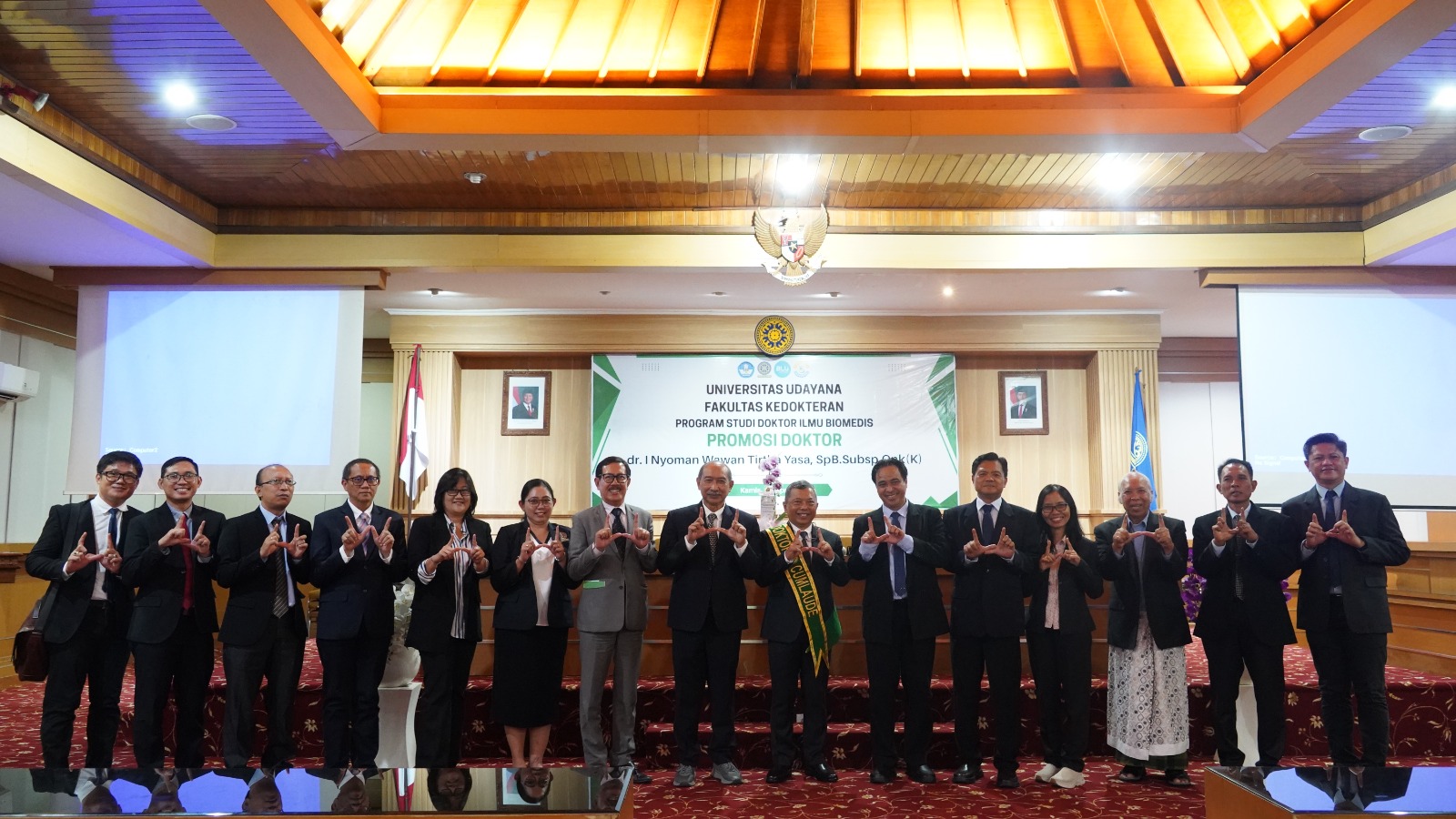
Held in the Meeting Room on the Third Floor of the Postgraduate Program Building, Udayana University, Jl. PB Sudirman, Denpasar, Bali, the Doctor of Biomedical Sciences Study Program, Faculty of Medicine, Udayana University, held an open doctoral promotion defense with candidate Dr. I Nyoman Wawan Tirtha Yasa, Sp.B., Subsp.Onk(K)., with the dissertation title "Low CD8+ T Lymphocyte Count, High CD4+/CD8+ Ratio, and Low CD8+/Foxp3+ Ratio as Risk Factors for Poor Neoadjuvant Chemotherapy Response in Stage III Triple-Negative Breast Cancer." (April 23, 2026)
Neoadjuvant chemotherapy (NAC) is the standard treatment for stage III triple-negative breast cancer (TNBC), but patient responses vary widely. The role of the immune system in the tumor microenvironment is known to influence therapy effectiveness, but there is no consensus on the most predictive immunological biomarkers. This study aimed to analyze the role of CD4⁺, CD8⁺, and Foxp3⁺ T lymphocyte counts, as well as the CD4⁺/CD8⁺ and CD8⁺/Foxp3⁺ ratios as risk factors for poor NAC response in stage III TNBC.
This study used a nested case-control design involving 74 stage III TNBC patients (37 with poor responses and 37 with good responses) who underwent NAC at Sanjiwani Hospital, Gianyar, and Ngoerah General Hospital, Bali, from 2019–2025. Chemotherapy response was assessed using Residual Cancer Burden (RCB). The number of CD4⁺, CD8⁺, and Foxp3⁺ T lymphocytes, as well as the CD4⁺/CD8⁺ and CD8⁺/Foxp3⁺ ratios in pre-NAC biopsy tissue, were analyzed using immunohistochemistry. Data were analyzed using bivariate tests and multivariate logistic regression.
Bivariate analysis showed that low CD8⁺ (p=0.005), high CD4⁺/CD8⁺ ratio (p< 0.001), and low CD8⁺/Foxp3⁺ ratio (p< 0.001) were significantly associated with poor chemotherapy response. High CD4⁺ count (p=0.227) and high Foxp3⁺ (p=0.079) did not show significant associations. Multivariate analysis identified a low CD8⁺/Foxp3⁺ ratio (≤1.05) as the strongest independent risk factor (AOR=20.0; 95%CI: 4.81–83.45; p< 0.001), followed by T4 tumor size (AOR=5.8; 95%CI: 1.50–22.30; p=0.011). The combination of the two conferred a 90.3% probability of poor response.
In conclusion, the CD8⁺/Foxp3⁺ ratio is a strong immunological biomarker predictive of NAC response in stage III TNBC and has the potential to be used for risk stratification and a more personalized therapeutic approach.
This examination was led by the Vice Dean for General Affairs and Finance, Faculty of Medicine, Udayana University, Prof. Dr. dr. I Made Muliarta, S.Ked., M.Kes., with the following examiners:
1. Prof. Dr. dr. I Wayan Sudarsa, Sp.B (K) Onk (Promoter)
2. Prof. Dr. dr. I Wayan Niryana, M.Kes., Sp.BS(K) (Co-Promoter I)
3. Dr. dr. Ni Putu Sriwidyani, Sp.PA., Subsp.S.M.(K) (Co-Promoter II)
4. Prof. Dr. dr. I Made Jawi, M.Kes
5. Prof. Dr. Ir. Ida Bagus Putra Manuaba, M.Phil
6. Prof. Dr. dr. I Wayan Putu Sutirta Yasa, M.Si
7. Prof. Dr. dr. I Made Sudarmaja, M.Kes
8. Prof. Dr. dr. Susy Purnawati, MKK
9. Dr. dr. I Wayan Suranadi, Sp.An-TI., Subsp.T.I.(K)
10. Dr. dr. I Nyoman Wande, S.Ked., Sp.PK(K)
By academic invitation:
1. Dr. I Wayan Sumardika, S.Ked., M.Med.Ed., Ph.D.
2. Dr. dr. I Wayan Juli Sumadi, Sp.PA., Subsp.M.S(K)
3. Dr. Made Winarsa Ruma, S.Ked., Ph.D.
4. Dr. dr. Ida Ayu Dewi Wiryanthini, S.Ked., M.Biomed
5. Dr. Made Indra Wijaya, MARS., Ph.D., FisQua
During this examination, Dr. dr. I Nyoman Wawan Tirtha Yasa, Sp.B., Subsp.Onk(K)., was declared the 490th Doctoral Graduate of the Biomedical Sciences Doctoral Study Program, Faculty of Medicine, Udayana University, with Cum Laude honors.
Gallery







UDAYANA UNIVERSITY