 ENG
ENG
 INA
INA
Examining the Potential of Exosome Therapy Against Corneal Blindness at the Doctoral Promotion Open Examination, Faculty of Medicine, Udayana University
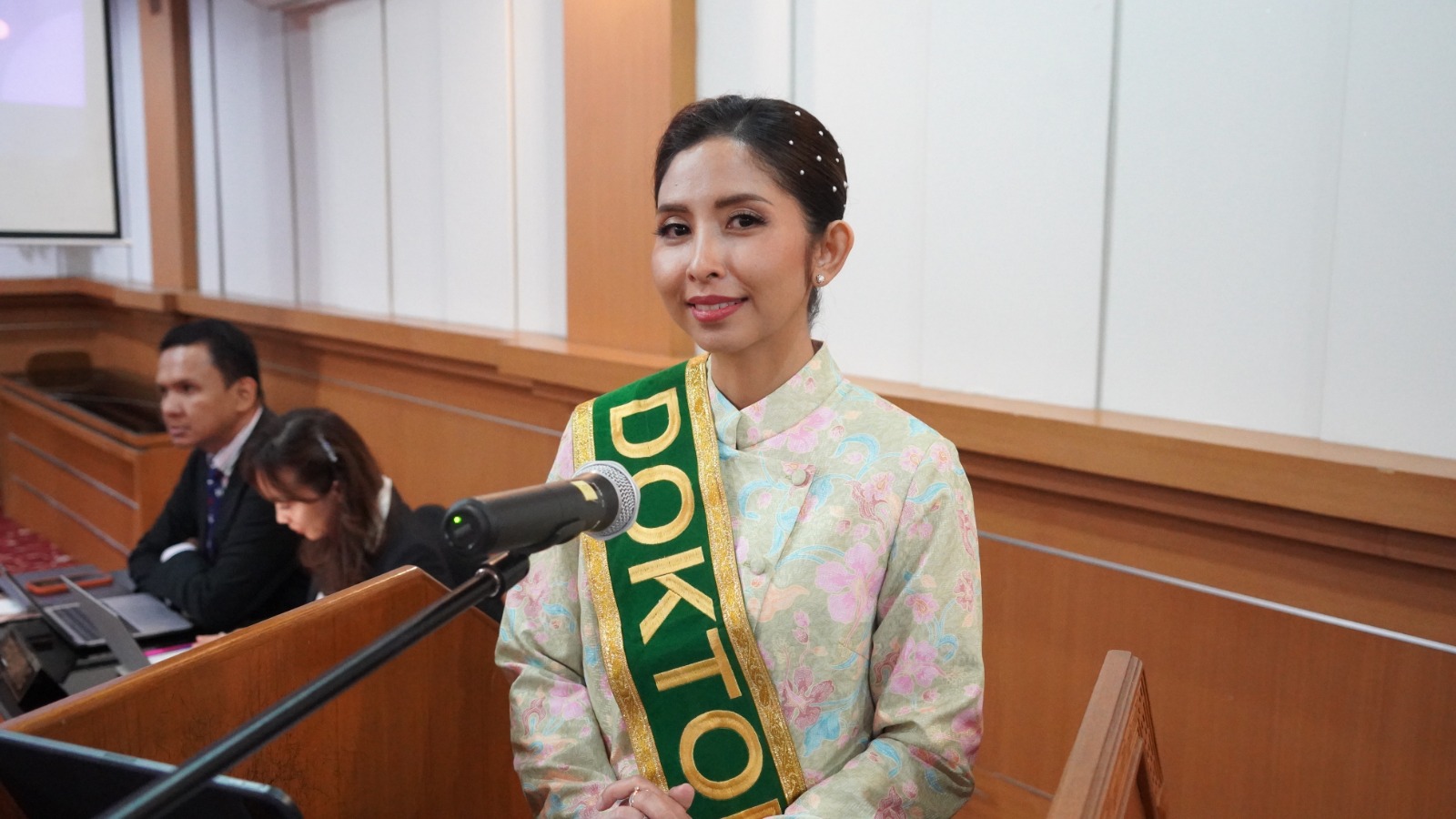
Examining the Potential of Exosome Therapy Against Corneal Blindness at the Doctoral Promotion Open Examination, Faculty of Medicine, Udayana University
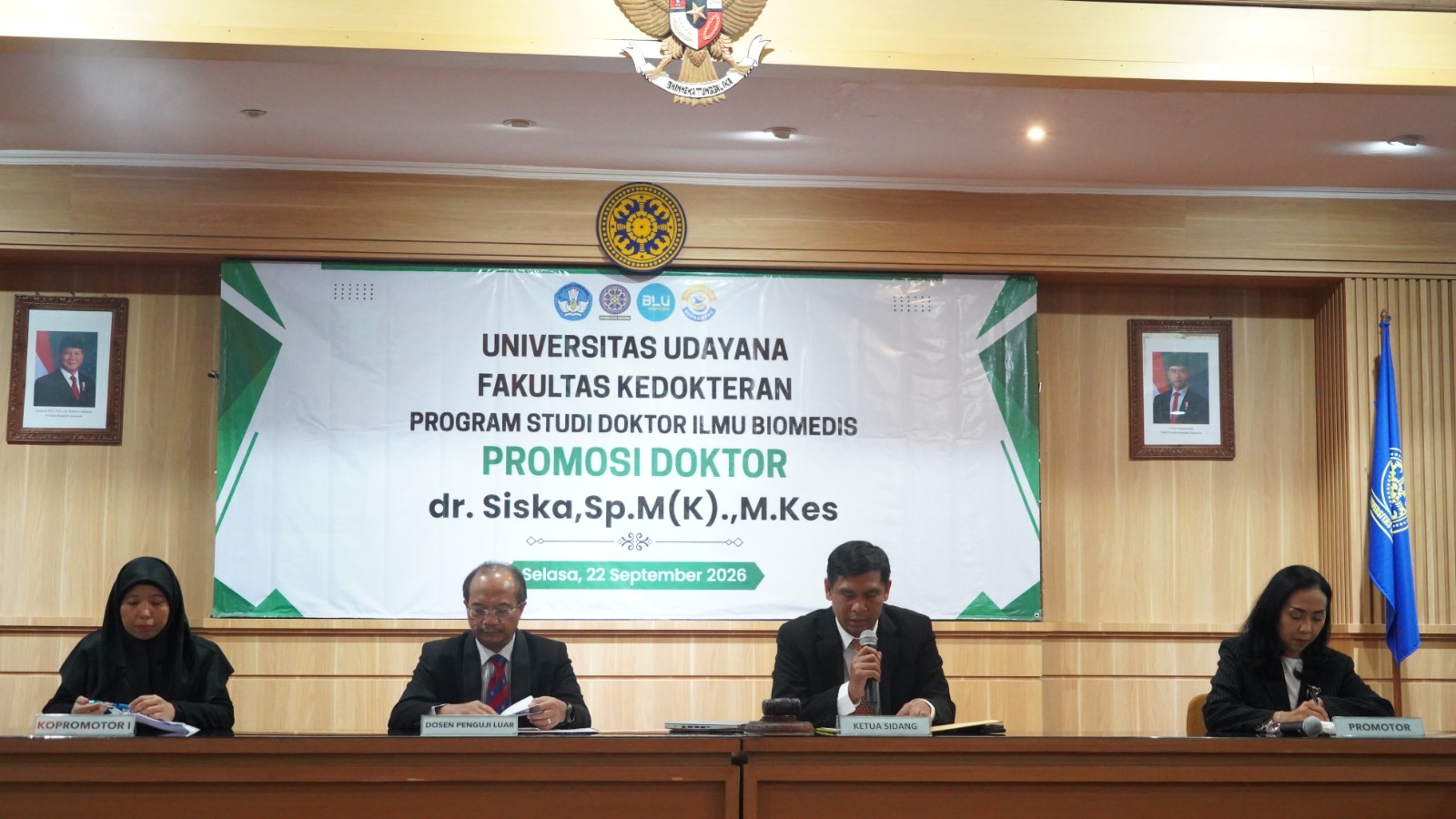
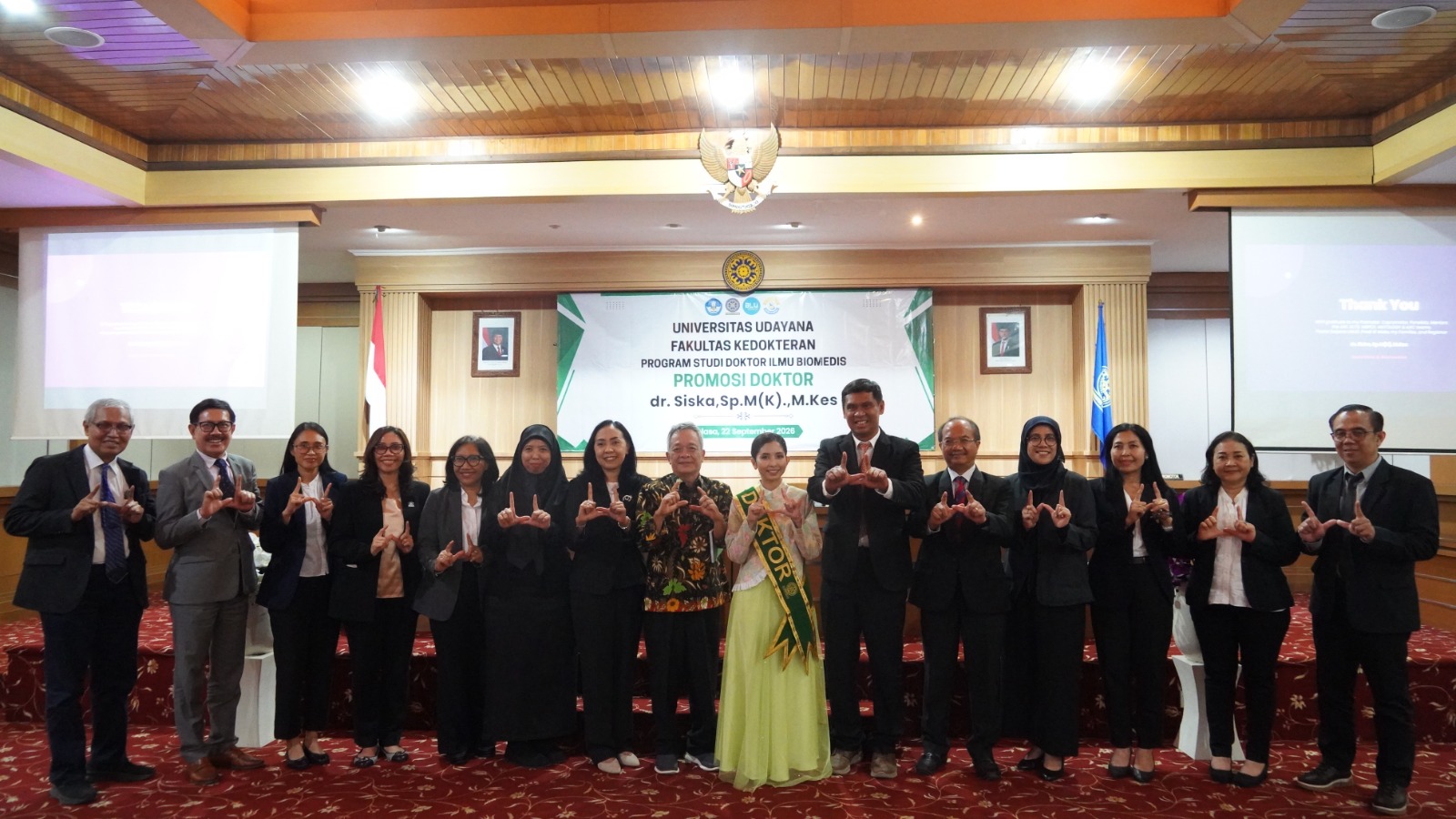
Held at the 3rd-floor meeting room of the Udayana University Postgraduate Building on Jl. PB Sudirman, Denpasar, Bali, the Doctoral Study Program in Biomedical Sciences at the Faculty of Medicine, Udayana University, conducted a doctoral promotion open examination for candidate Dr. Siska, Sp.M(K), M.Kes. Her dissertation was titled "Comparison of the Effects of Intracameral Injection of Umbilical Cord-Derived Mesenchymal Stem Cells (UC-MSCs) versus Exosomes on Damaged Rabbit Corneal Endothelium." (September 22, 2026)
Corneal endothelial dysfunction is a leading cause of blindness due to the limited regenerative capacity of corneal endothelial cells (CECs). Umbilical cord-derived mesenchymal stem cells (UC-MSCs) and their exosomes hold potential as regenerative therapies; however, evidence regarding dose-response relationships and the comparative effectiveness of UC-MSCs versus exosomes remains limited. This study aimed to evaluate the effects of intracameral administration of UC-MSCs (at doses of 140,000 and 250,000 cells) and exosomes (4.5×10⁸ particles/10 μL) on central corneal thickness (CCT), corneal clarity, endothelial cell density (ECD), hexagonality (HEX), coefficient of variation (CV), histology, and the expression of Na/K-ATPase, ZO-1, N-Cadherin, SMAD6/7, and TGF-β2 in a rabbit model of corneal endothelial injury.
This was a post-test-only experimental study involving 21 male New Zealand White rabbits. Injury was induced by scraping an 8 mm diameter area of Descemet's membrane, followed by a single intracameral injection of either balanced salt solution (BSS), UC-MSCs (140,000 cells), UC-MSCs (250,000 cells), or exosomes. Evaluations were conducted at baseline, day 7, and day 14 using slit-lamp examination, specular microscopy, tonometry, H&E histology, and assessments of Na/K-ATPase levels, ZO-1, n-Cadherin, SMAD6/7, and TGF-β2.
All animals survived until the end of the study. By day 14, the SPM-TP 140,000 and exosome groups demonstrated ECD stabilization, CCT normalization, and complete corneal clarity. The exosome group exhibited the highest hexagonality (74.3±4.5%) and the lowest CV (14.3±4.2%), indicating superior endothelial morphology. The SPM-TP 250,000 group showed more variable results, as one eye experienced corneal decompensation accompanied by increased CCT, severe opacity, and elevated intraocular pressure requiring timolol therapy. In the exosome-treated group, Na/K-ATPase and TGF-β2 markers in the aqueous humor most closely approached levels indicative of corneal endothelial recovery.
Intracameral exosome administration supports the recovery of corneal endothelial structure and function following injury. These results indicate that exosome-based cell-free therapy is a promising approach for corneal endothelial regeneration and warrants further investigation. Keywords: corneal endothelium; mesenchymal stem cells; umbilical cord; exosomes; intracameral injection; rabbit corneal endothelium.
This examination was chaired by the Dean of the Faculty of Medicine, Udayana University, Prof. Dr. dr. I Gede Eka Wiratnaya, Sp.OT., Subsp.Onk.Ort.R(K)., with an examination team comprising:
1. Dr. dr. Anak Agung Mas Putrawati Triningrat, Sp.M(K). (Promoter)
2. dr. Radiana Dhewayani Antarianto, M.Biomed, Ph.D (Co-promoter I)
3. Prof. Dr. dr. I Made Jawi, M.Kes
4. Prof. Dr. dr. Heri Suroto, Sp.OT., SubSp.TLBM(K)
5. Prof. Dr. dr. Ni Made Linawati, S.Ked., M.Si
6. Dr. dr. Made Ratna Saraswati, Sp.PD,KEMD., FINASIM
7. Dr. dr. I Wayan Suranadi, Sp.AnTI,Subsp.T.I.(K)
8. Dr. dr. Putu Yuliawati, Sp.M(K)
9. Dr. dr. Ariesanti Tri Handayani, Sp.M(K)
With academic invitees:
1. Dr. dr. I Wayan Gede Jayanegara, Sp.M(K)
2. Dr. dr. Ida Ayu Ika Wahyuniari, M.Kes
3. Dr. dr. Ari Andayani, Sp.M(K)., MH.Kes
4. Dr. dr. I Wayan Eka Sutyawan, Sp.M(K)
5. Dr. dr. Ni Made Ayu Surasmiati, M.Biomed., Sp.M(K)
In this examination, Dr. dr. Siska, Sp.M(K)., M.Kes., was declared to have passed as the 507th doctoral graduate of the Biomedical Sciences Doctoral Study Program at the Faculty of Medicine, Udayana University, with the distinction of "Very Satisfactory."
Gallery
UDAYANA UNIVERSITY