 ENG
ENG
 INA
INA
Doctor of Medicine Studies the Potential of Sidhakarya Meditation to Improve the Quality of Life of Hemodialysis Patients
Doctor of Medicine Studies the Potential of Sidhakarya Meditation to Improve the Quality of Life of Hemodialysis Patients
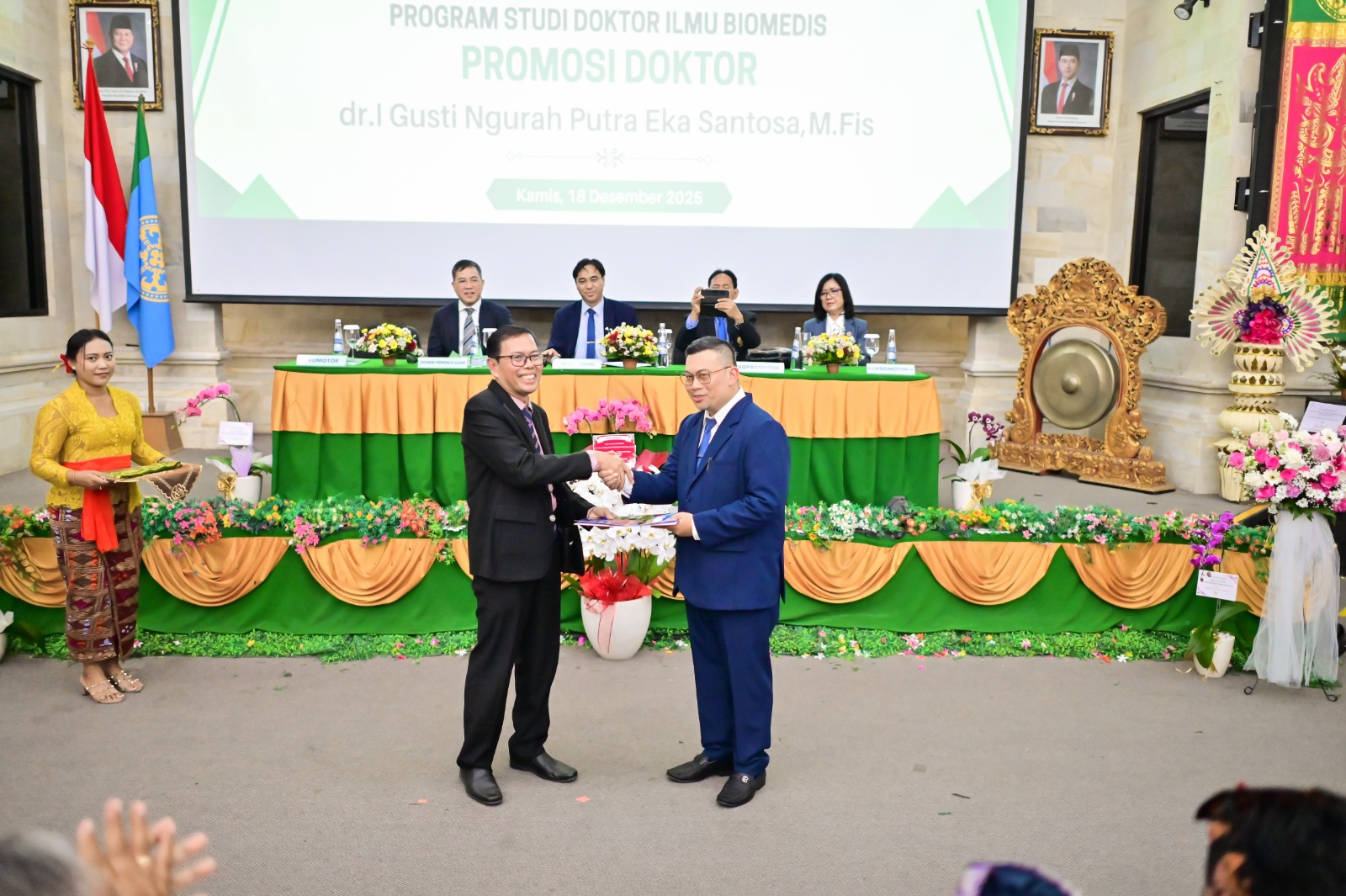
Held in the Dr. A.A. Made Djelantik Meeting Room, Fourth Floor, Faculty of Medicine Building, Jl. PB Sudirman, Denpasar, Bali, the Doctor of Medicine Study Program, Faculty of Medicine, Udayana University, held an open doctoral promotion defense with candidate Dr. I Gusti Ngurah Putra Eka Santosa, M.Fis., presenting a dissertation entitled "Sidhakary Meditation Reduces Malondialdehyde Levels, Modulates CD34 Hematopoietic Stem Cells, and Improves the Quality of Life of Patients on Regular Hemodialysis." (December 18, 2025)
Patients with chronic kidney disease undergoing maintenance hemodialysis (MHD) face complex complications involving a multidimensional decline in quality of life and disruption of biological balance, characterized by high oxidative stress and low regenerative capacity. This study aimed to evaluate the effect of Sidhakarya Meditation on malondialdehyde (MDA) levels, a marker of oxidative stress, CD34+ hematopoietic stem cell counts, and quality of life scores in MHD patients.
This study used a quasi-experimental design with a pre-test and post-test group approach in patients undergoing regular hemodialysis. The treatment group participated in an intensive seven-day Sidhakarya Meditation program. MDA and CD34+ cell levels were analyzed using blood samples, while quality of life was assessed using the WHOQOL-BREF questionnaire.
This study found significant improvements in all four quality of life domains post-intervention: physical health (mean increase from 18 to 27; p = 0.000), psychological well-being (from 20 to 22.5; p = 0.001), social relationships (from 9 to 11.5; p = 0.000), and environmental support (from 26 to 29.5; p = 0.001).
Sidhakarya Meditation has the potential to effectively reduce oxidative stress (MDA), modulate hepatopoietic stem cells (CD34+), and improve the quality of life of MHD patients through improved biological mechanisms. These findings support the use of Sidhakarya Meditation as a complementary non-pharmacological therapy modality in the clinical management of chronic kidney disease. However, further research with a longer duration is needed to evaluate the consistency of the long-term effects of this intervention.
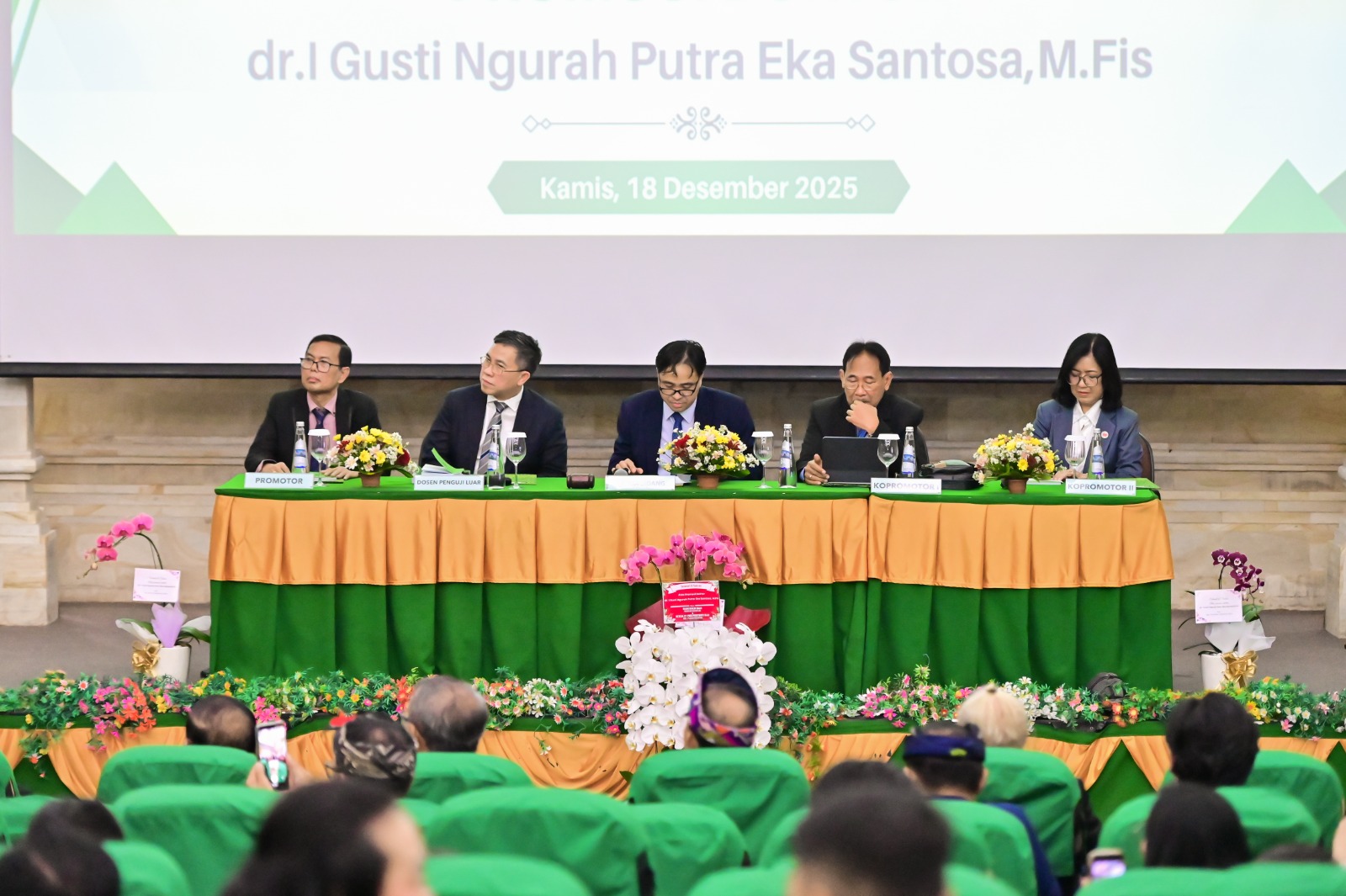
This examination was led by the Vice Dean for General Affairs and Finance, Faculty of Medicine (FK), Udayana University, Prof. Dr. dr. I Made Muliarta, S.Ked., M.Kes., with the following examiners:
1. Prof. Dr. dr. I Made Jawi, M.Kes (Promoter)
2. Prof. Dr. dr. I Wayan Putu Sutirta Yasa, M.Si (Co-Promoter I)
3. Dr. dr. Yenny Kandarini, Sp.PD., KGH (Co-Promoter II)
4. Prof. Dr. dr. Susy Purnawati, MKK
5. Prof. Dr. Dr. Agung Putra, M.Si.Med
6. Prof. Dr. dr. Cokorda Bagus Jaya Lesmana, S.Ked., Sp.KJ(K), MARS
7. Dr. dr. I Gusti Putu Suka Aryana, Sp.PD, K-Ger, FINASIM
8. Prof. Dr. Ir. Ida Bagus Putra Manuaba, M.Phil
9. Prof. Dr. dr. A. A. Ngurah Subawa, M.Sc., Sp.KKLP
By academic invitation:
1. Dr. dr. Wira Gotera, Sp.PD-KEMD-FINASIM
2. Dr. dr. Made Agus Hendrayana, M.Ked
3. Dr. Made Indra Wijaya, MARS., Ph.D., FisQua
4. Dr. dr. Putu Asih Primatanti, Sp.KJ
5. Dr. apt. Ketut Agus Adrianta, S.Farm., M.Biomed
In this exam, Dr. Dr. I Gusti Ngurah Putra Eka Santosa, M.Fis., was declared the 478th graduate of the Doctoral Program in Medical Sciences, Faculty of Medicine, Udayana University, with the distinction of Cum Laude.
Gallery







UDAYANA UNIVERSITY