 ENG
ENG
 INA
INA
Doctor of Medicine Studies the Role of Hypoxia and Inflammatory Biomarkers in the Risk of Primary Open-Angle Glaucoma

Doctor of Medicine Studies the Role of Hypoxia and Inflammatory Biomarkers in the Risk of Primary Open-Angle Glaucoma
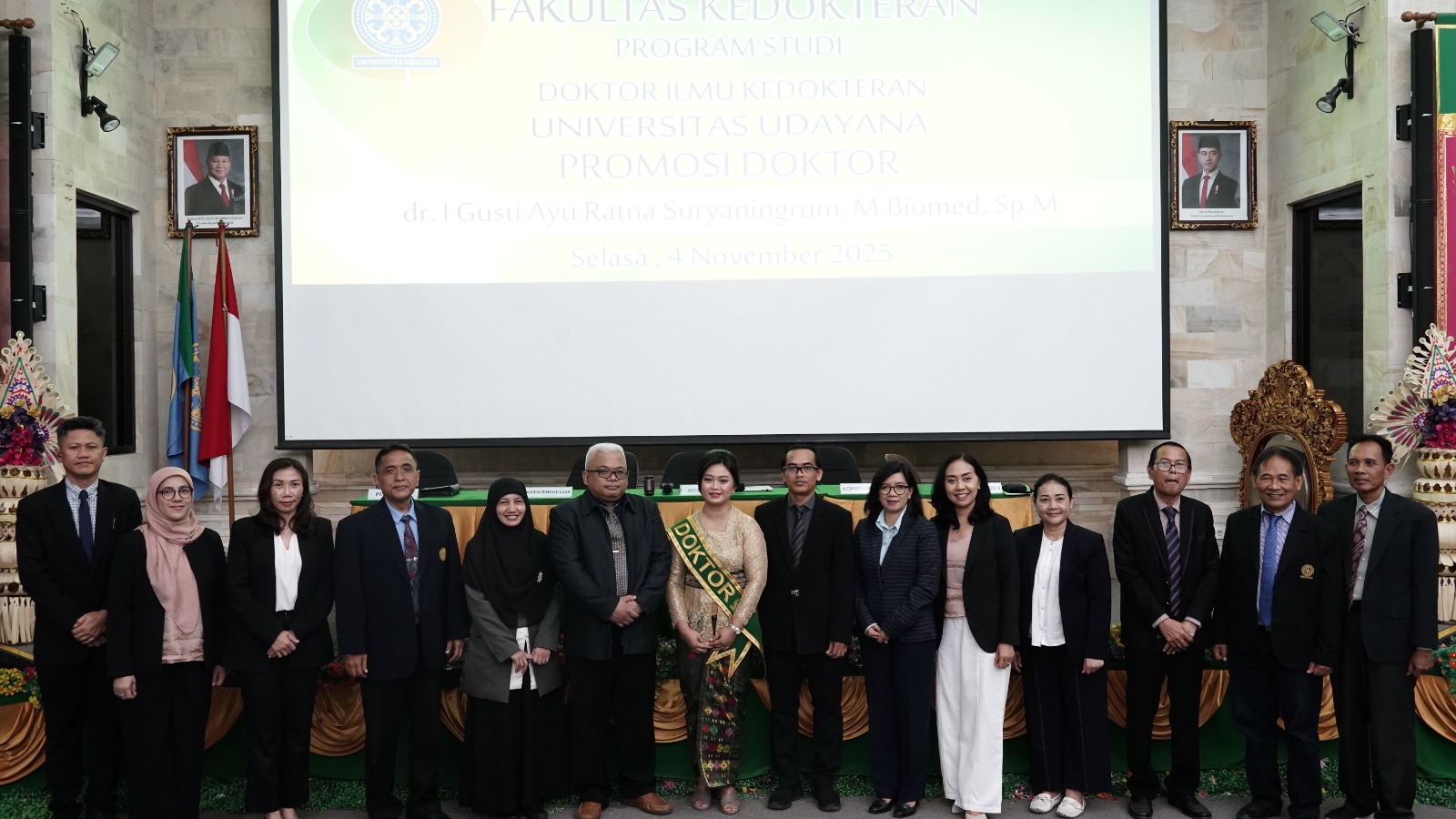
Held in the Dr. A.A. Made Djelantik Meeting Room, Fourth Floor, Faculty of Medicine Building, Jl. PB Sudirman, Denpasar, Bali, the Doctor of Medicine Study Program, Faculty of Medicine, Udayana University, held an open doctoral promotion defense with Dr. I Gusti Ayu Ratna Suryaningrum, M.Biomed, Sp.M., as the candidate for the position, entitled "MicroRNA-155 Expression, Tumor Necrosis Factor-Alpha Levels, Hypoxia-Inducible Factor 1-Alpha, and Interleukin-10 in Aqueous Humor as Risk Factors for Primary Open-Angle Glaucoma." (November 4, 2025)
Primary open-angle glaucoma (POAG) is an irreversible neurodegenerative disease and remains a leading cause of blindness worldwide. Although intraocular pressure (IOP) is the only modifiable risk factor, disease progression can still occur. Neuroinflammatory mechanisms and hypoxia-induced apoptosis are thought to play a role in retinal ganglion cell (RGC) damage. This study aimed to evaluate the role of miRNA-155 expression, TNF-α, HIF-1α, and IL-10 levels in aqueous humor as risk factors for POAG.
An age-matched case-control study was conducted in 44 subjects (22 POAG patients and 22 senile cataract controls). Aqueous humor samples were collected from POAG patients undergoing trabeculectomy or phacotrabeculectomy (cases) and senile cataract patients without glaucoma undergoing phacoemulsification (controls). miRNA-155 expression was measured using quantitative real-time PCR, while TNF-α, HIF-1α, and IL-10 levels were measured using ELISA. Statistical analysis was performed to assess the association between biomarkers and POAG risk.
The expression of miRNA-155 in the aqueous humor of the POAG group was significantly lower (fold change < 1.76) compared to controls (p< 0.05). Conversely, high levels of HIF-1α (>134.94 pg/mL) and IL-10 (≥3.28 pg/mL) were also associated with POAG risk, while TNF-α showed no significant differences. Logistic regression analysis showed that low miRNA-155 and high HIF-1α levels acted as risk factors for POAG.
High HIF-1α levels were shown to be significant and acted as a risk factor for POAG. Low miRNA-155 expression and high IL-10 were also significantly associated with POAG, suggesting a compensatory mechanism against chronic inflammation and intraocular hypoxia, while TNF-α was not shown to be a significant risk factor. This biomarker pattern reflects a shift from inflammation to chronic hypoxia with compensatory immune regulation in POAG.
Keywords: miRNA-155, TNF-alpha, IL-10, hypoxia inducible factor-1alpha, neuroinflammation, hypoxia, glaucoma
This examination was led by the Vice Dean for Academic and Planning, Faculty of Medicine, Udayana University, Prof. Dr. I Md. Ady Wirawan, MPH., Ph.D., with the following examining team:
1. Prof. Dr. dr. Tjokorda Gde Bagus Mahadewa, M.Kes., Sp.BS (K) Spinal, FICS, FINSS (Promoter)
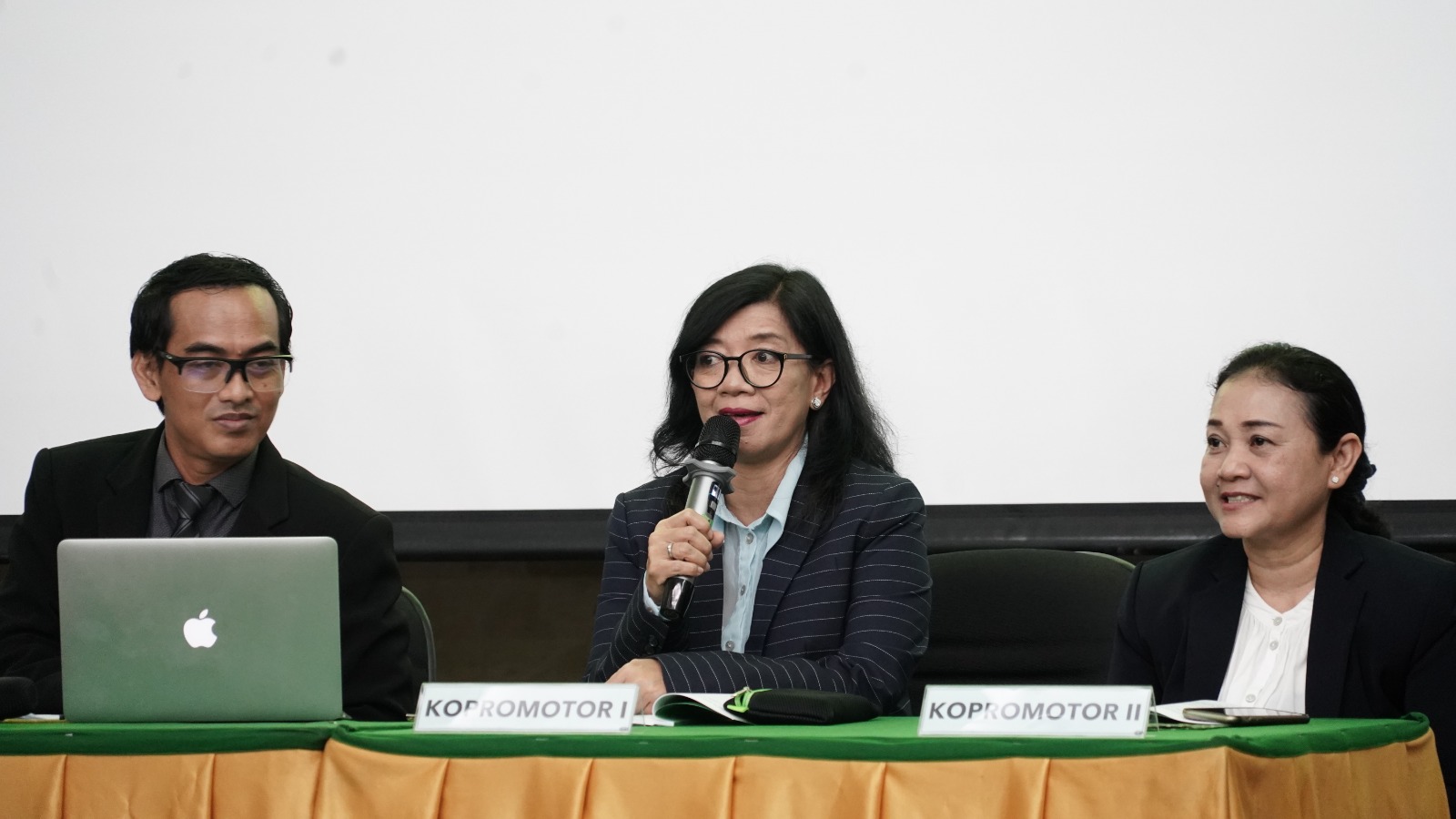
2. Prof. Dr. dr. Desak Made Wihandani, M.Kes (Co-Promoter I)
3. Dr. dr. Putu Yuliawati, Sp.M(K) (Co-Promoter II)
4. Prof. Dr. dr. I Made Jawi, M.Kes
5. Prof. Dr. dr. I Wayan Putu Sutirta Yasa, M.Si
6. Prof. Dr. dr. I Made Sudarmaja, M.Kes
7. Prof. Dr. dr. Bagus Komang Satriyasa, M.Repro
8. Dr. dr. I Putu Pramana Suarjaya, Sp.An., M.Kes, KMN, KNA, FIPM
9. Dr. dr. Virna Dwi Oktariana Asrory, Sp.M.(K)
10. Dr. dr. Anak Agung Mas Putrawati Triningrat, Sp.M(K)
By academic invitation:
1. Dr.rer.nat. dr. Ni Nyoman Ayu Dewi, M.Si
2. Dr. dr. I Nyoman Wande, S.Ked., Sp.PK(K)
3. Dr. dr. Ari Andayani, Sp.M(K)
4. Dr. dr. I Wayan Eka Sutyawan, Sp.M(K)
5. Dr. dr. Ariesanti Tri Handayani, Sp.M(K)
In this exam, Dr. dr. I Gusti Ayu Ratna Suryaningrum, M.Biomed, Sp.M., was declared to have graduated as the 475th Doctoral Graduate of the Doctoral Program in Medical Sciences, Faculty of Medicine, Udayana University with the predicate Very Satisfactory.
Gallery






UDAYANA UNIVERSITY