 ENG
ENG
 INA
INA
Udayana University Faculty of Medicine (FK UNUD) Department of Psychiatry Hosts 2026 Continuing Professional Development Seminar: Encouraging Healthcare Workers to Become Credible Mental Health Educators in the Digital Era
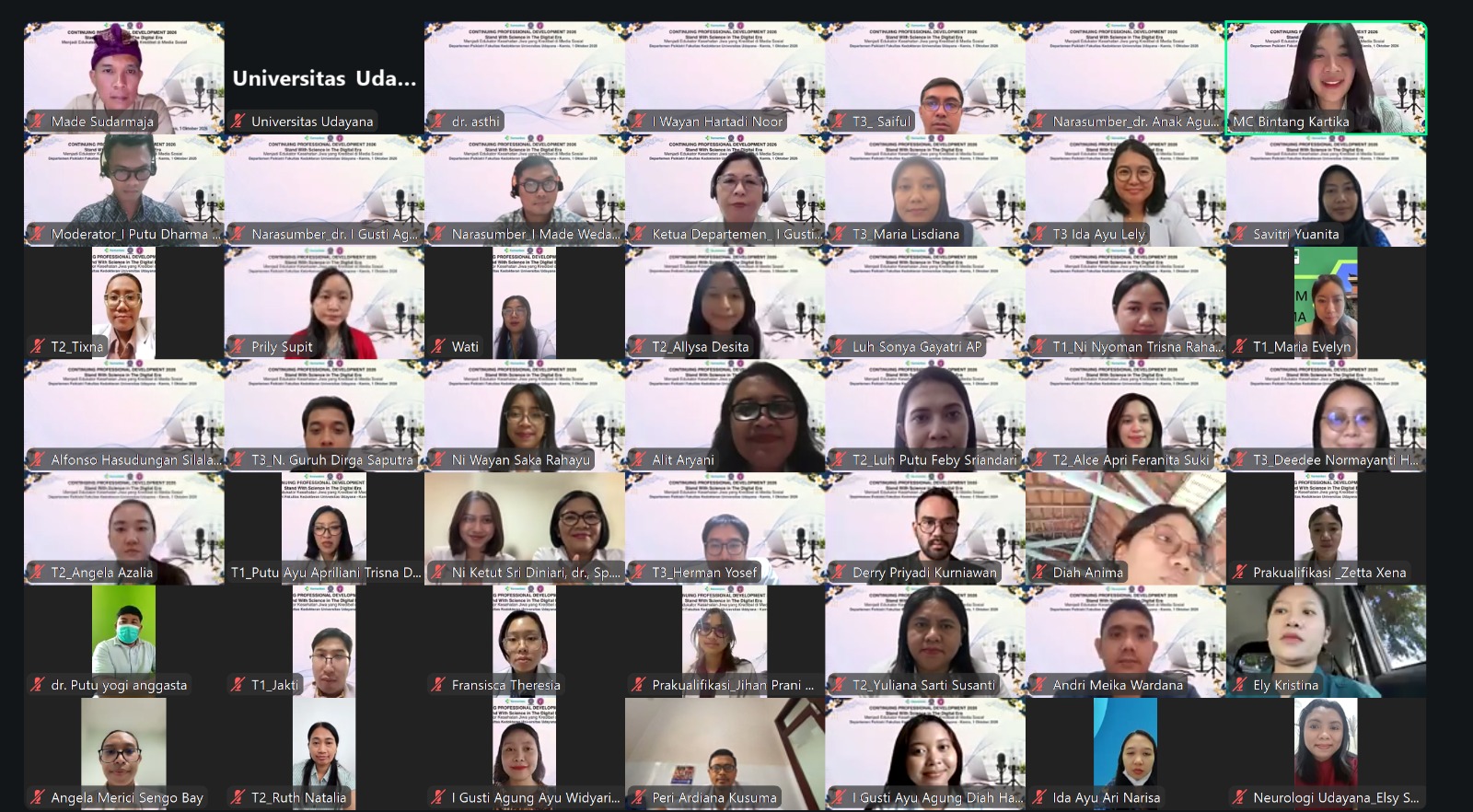
Udayana University Faculty of Medicine (FK UNUD) Department of Psychiatry Hosts 2026 Continuing Professional Development Seminar: Encouraging Healthcare Workers to Become Credible Mental Health Educators in the Digital Era
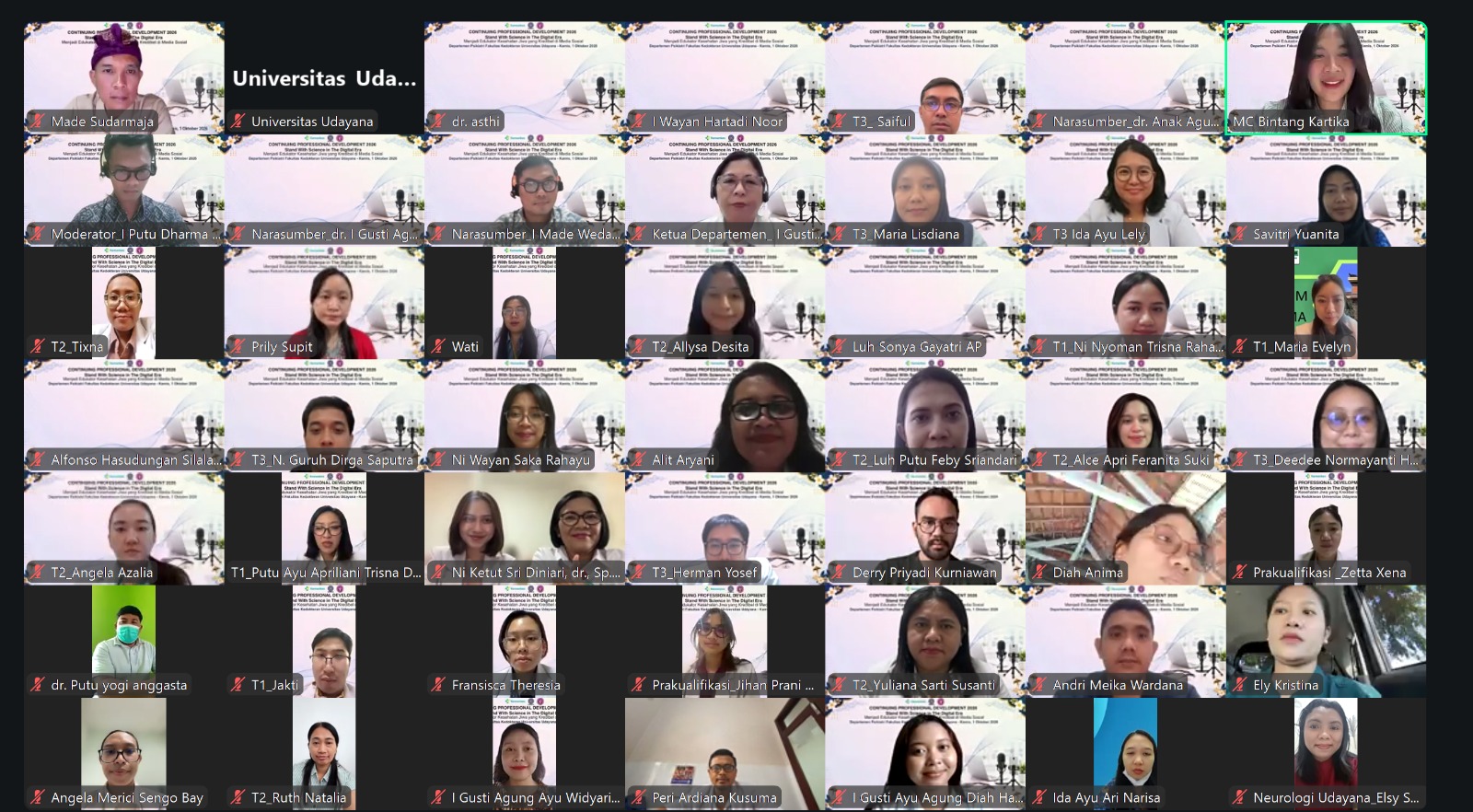
The Department of Psychiatry at the Faculty of Medicine, Udayana University (FK UNUD)—in collaboration with Prof. Ngoerah Hospital—held a Continuing Professional Development (CPD) event on Thursday, October 1, 2026. Titled "Stand with Science in the Digital Era: Becoming Credible Mental Health Educators on Social Media," the event was conducted online via the Zoom platform.
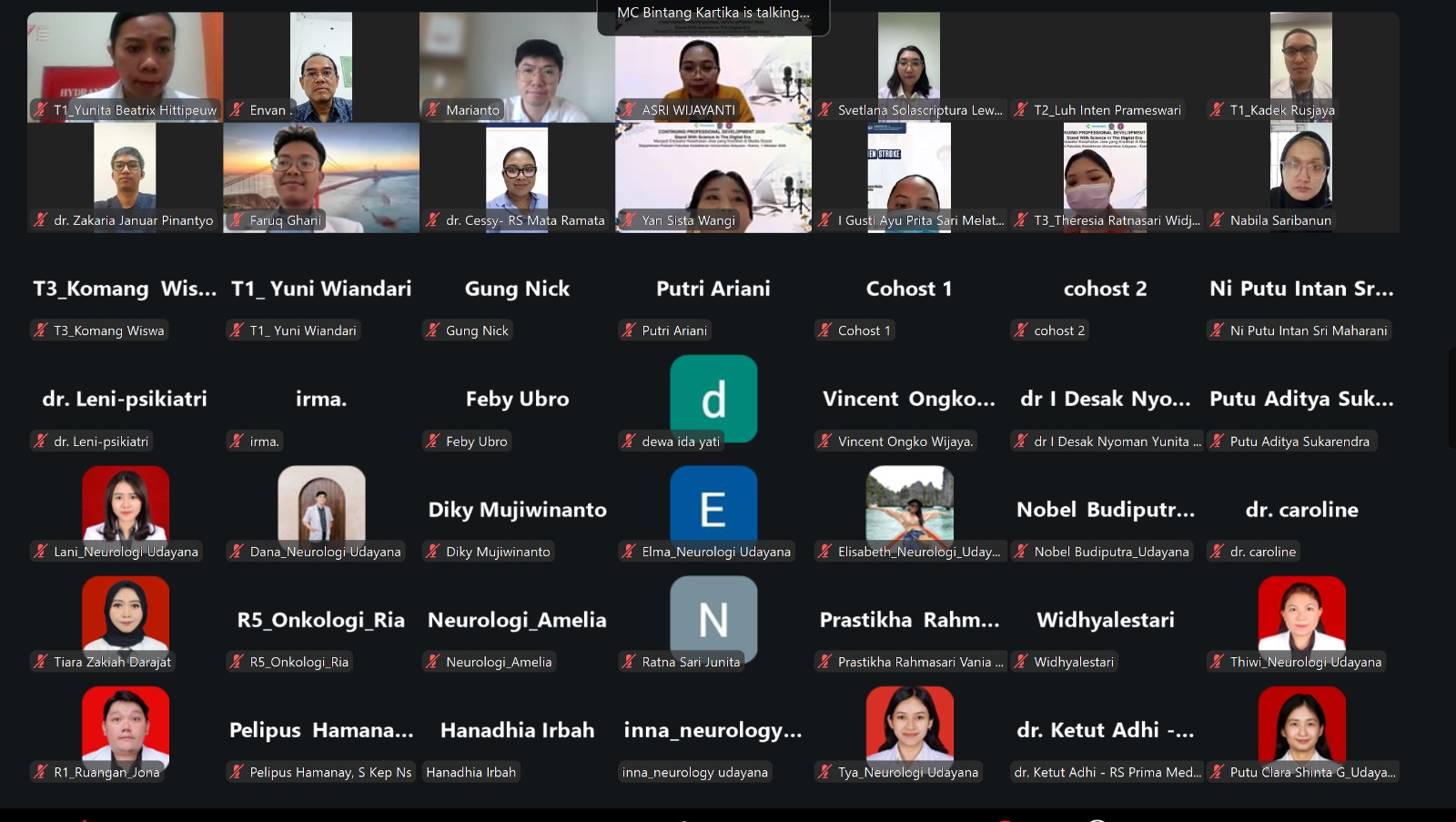
The event was officially opened by Dr. I Gusti Ayu Indah Ardani, Sp.K.J., Subsp. A.R.(K), Head of the FK UNUD Department of Psychiatry, who attended on behalf of the Dean of the Faculty of Medicine, Udayana University. This Continuing Medical Education-based seminar was attended by 210 participants, including psychiatrists, general practitioners, medical residents, nurses, clinical psychologists, health science students, and members of the general public.
In her remarks representing the Dean of FK UNUD, Dr. Indah Ardani emphasized that mental health professionals in the modern era are expected to go beyond their roles as clinicians in the consulting room; they must also take an active role as trusted public educators amidst the rapid flow of digital information.
"In the digital era, information regarding mental health can reach millions of people in mere seconds. This presents both a significant opportunity and a heavy responsibility. It is not enough for healthcare workers to simply be skilled clinicians in the practice setting; they must also establish a presence in the digital space as trusted sources of evidence-based education. The key lies in maintaining a balance between science, accessible communication, ethics, and professionalism, without compromising professional integrity," stated Dr. Indah Ardani while officially opening the event. This continuing professional development activity was organized in response to the rising prevalence of self-diagnosis, unsubstantiated medical claims ("over-claiming"), the spread of misinformation, and breaches of ethics and patient confidentiality on social media. Through this seminar, participants were equipped with comprehensive guidance covering topics ranging from medical legal and ethical principles and strategies for dignified personal branding to visual communication techniques and the creation of scientific content that engages the general public.
The scientific seminar series featured comprehensive presentations by experts:
1. Indonesian Medical Code of Ethics (KODEKI) & Inter-Colleague Relationships
The Chairman of the Indonesian Medical Association (IDI) Bali Chapter, Prof. Dr. dr. I Made Sudarmaja, M.Kes, outlined the importance of steadfastly upholding general obligations—as well as obligations toward patients, oneself, and colleagues—in accordance with KODEKI 2025. This session emphasized the prohibition against making negative comments about colleagues in public or on social media, the importance of ethical referral and consultation practices, and the obligation for medical professionals to respectfully remind one another of these standards to preserve the profession's dignity and independence.
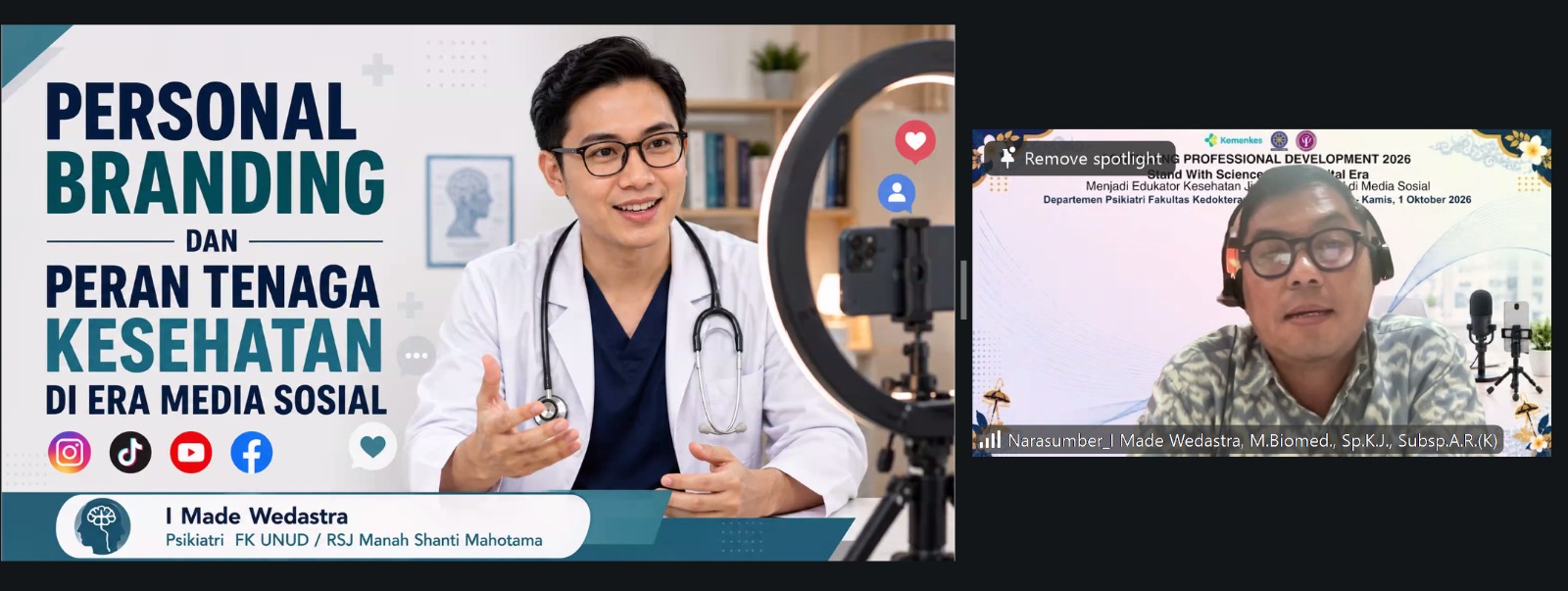
2. Personal Branding for Healthcare Professionals in the Digital Era
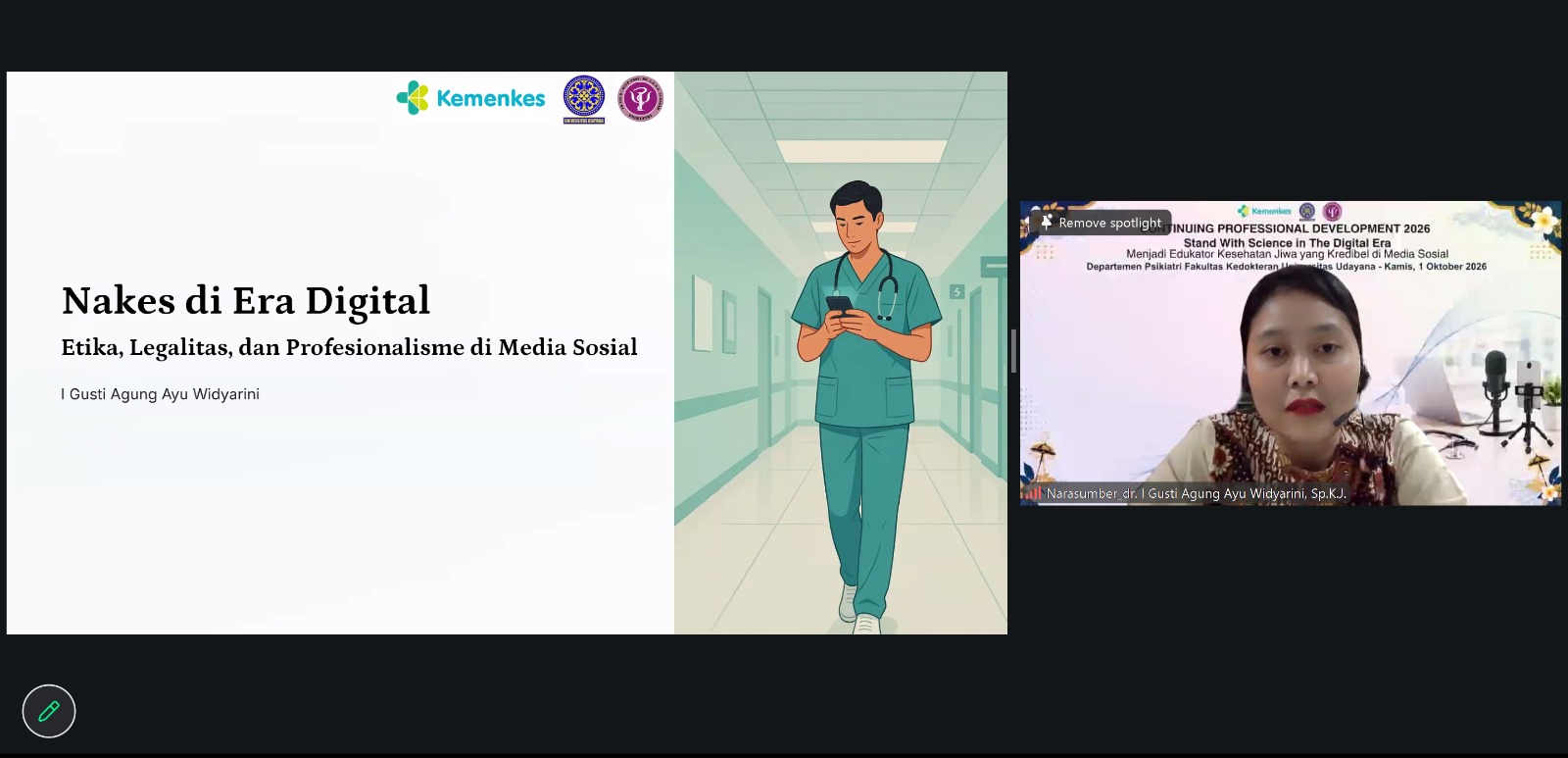
Dr. I Made Wedastra, M.Biomed, Sp.K.J., Subsp. A.R.(K), presented the "5P" concept of personal branding (Purpose, Person, Practice, Platform, and Packaging). He highlighted the fundamental distinction between general influencers—who often prioritize follower counts or sensationalism—and healthcare professionals, who must focus on competence, integrity, empathy, and contribution. Dr. Wedastra warned against the dangers of "over-branding" and emphasized that the primary goal of healthcare professionals using social media is to build public trust, rather than merely chasing popularity. 3. Ethics, Legality, and Professionalism in Healthcare Workers' Social Media Use
Dr. I Gusti Agung Ayu Widyarini, Sp.K.J., explored fundamental bioethical principles (beneficence, non-maleficence, autonomy, and justice) alongside guidelines from the IDI Medical Ethics Council (MKEK) regarding the digital space. She outlined strict legal frameworks, including Minister of Health Regulation No. 24/2022 on Medical Records and the ITE Law. Dr. Widyarini emphasized the strict prohibition against uploading patient photos, videos, or clinical data—even if faces are obscured—and warned of potential consequences ranging from ethical sanctions (MKEK) and disciplinary actions (MKDKI) to criminal or civil legal penalties for those who breach patient confidentiality.
4. Transforming Scientific Content into Engaging Public Education
Dr. A.A. Ngr. Andika Damarnegara, Sp.K.J., presented a practical five-step workflow (blueprint) for content creation: starting with scientific journal research, translating academic jargon into lay language, employing relevant "hooks" to spark curiosity, using everyday analogies (such as likening depression to a worn-out mobile phone battery), and designing infographics. Dr. Andika warned against the pitfalls of prioritizing virality ("FYP") above all else and equipped participants with the "3 Filters Before Uploading" checklist: Is it True? Is it Helpful? Is it Ethical?
Through this 2026 Continuing Professional Development program, the Faculty of Medicine at Udayana University aims to produce healthcare professionals who are not only excellent academic and clinical approaches, but also capable of serving as ethical, trusted, and impactful agents of mental health education for the Indonesian public in the digital era.
Gallery
UDAYANA UNIVERSITY