 ENG
ENG
 INA
INA
Exploring the Potential of Sweet Potato Leaf Flavonoids for Diabetes Mellitus: Open Doctoral Examination at the Faculty of Medicine, Udayana University
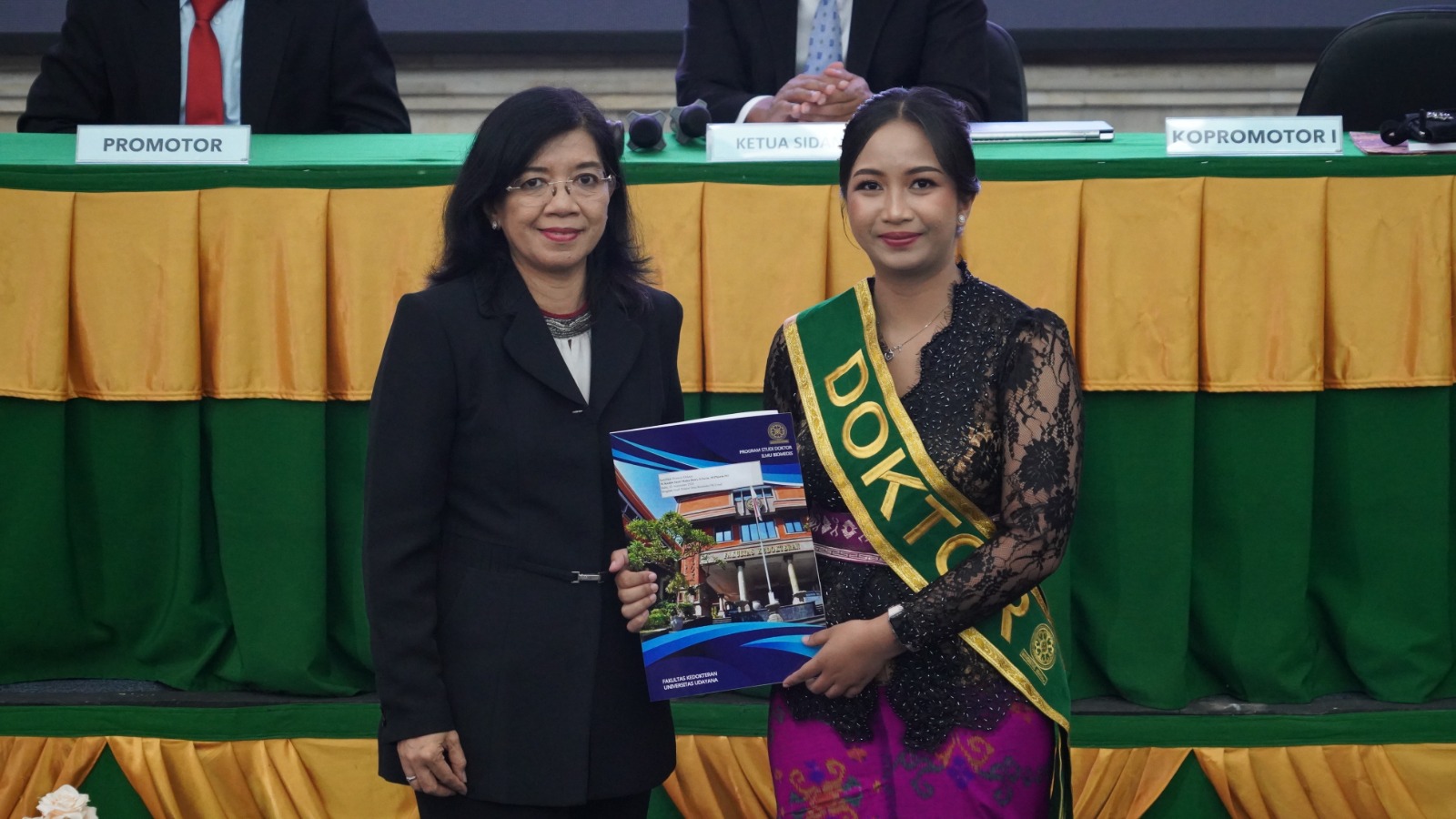
Exploring the Potential of Sweet Potato Leaf Flavonoids for Diabetes Mellitus: Open Doctoral Examination at the Faculty of Medicine, Udayana University
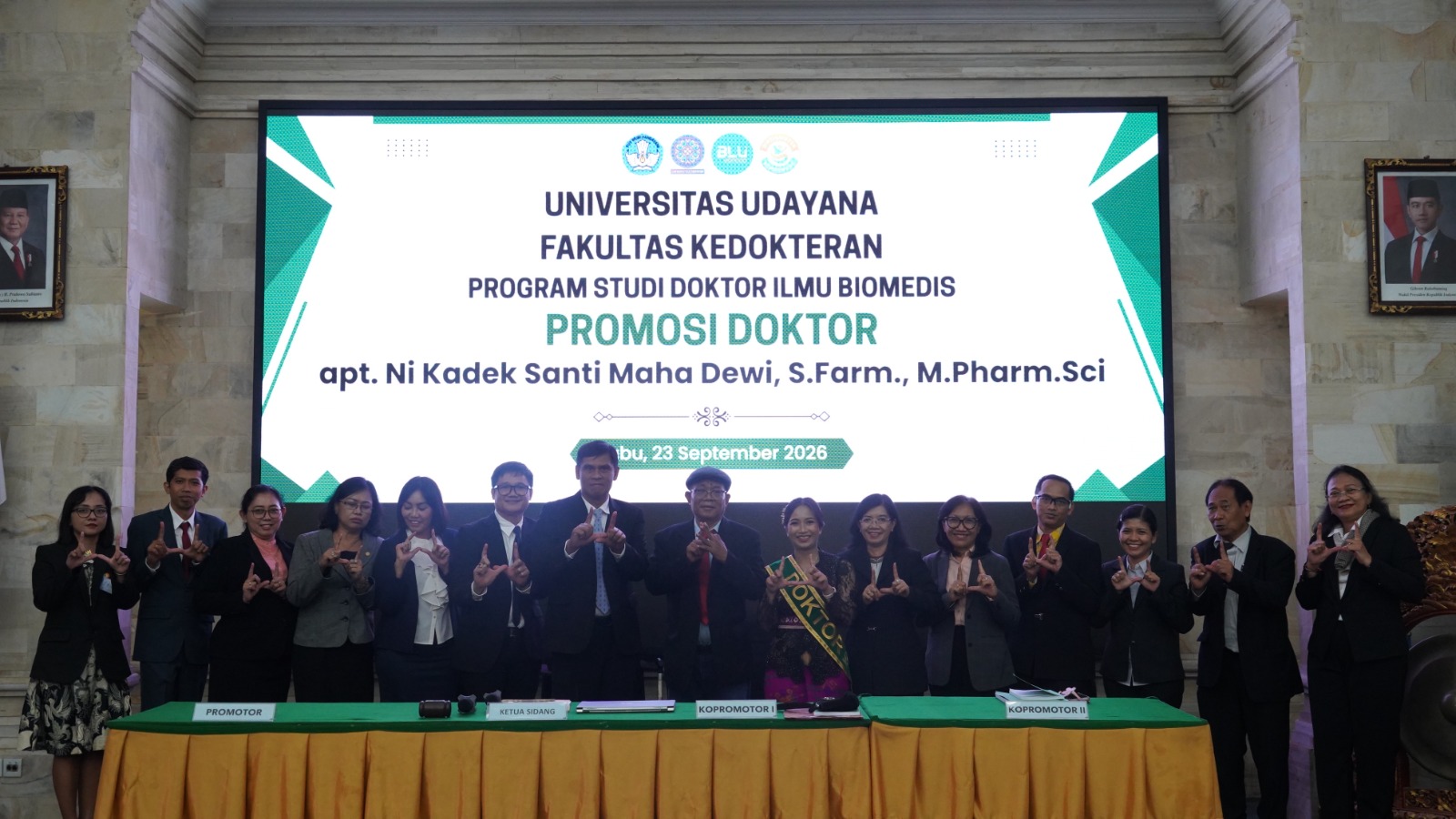
Held at the Dr. A.A. Made Djelantik Meeting Room (4th Floor, Faculty of Medicine Building, Udayana University, Denpasar, Bali), the Doctoral Program in Biomedical Sciences at the Faculty of Medicine, Udayana University, conducted an open doctoral promotion examination for candidate Ni Kadek Santi Maha Dewi, S.Farm., M.Pharm.Sci. Her dissertation was titled "The Potential of Flavonoids from *Ipomoea batatas* L. Ethanol Extract in Modulating the GLP-1 Pathway and Inhibiting the DPP-IV Enzyme in Type 2 Diabetes Mellitus: An *In Silico* and *In Vivo* Study." (September 23, 2026)
The projected global rise in the prevalence of type 2 diabetes mellitus has created an urgent need for phytotherapeutic agents capable of improving insulin secretion and physiologically controlling blood glucose levels through the modulation of incretin pathways. *Ipomoea batatas* L. (IBL) leaves contain flavonoids with antidiabetic potential. This study aimed to explore the mechanism of action of IBL by demonstrating the efficacy of flavonoid-rich IBL leaf ethanol extract through *in vivo* and *in silico* methods, as well as by establishing Quality Markers (Q-Markers) across various local varieties.
The research methodology began with a systematic review based on PRISMA guidelines, utilizing global databases. Subsequently, a 21-day *in vivo* study was conducted on Wistar rats serving as a type 2 diabetes mellitus (T2DM) model; the rats were administered IBL leaf ethanol extract capsules at total flavonoid dosages of 0.297, 0.594, and 0.891 mgEQ/g to analyze levels of GLP-1, C-peptide, and HbA1c. The mechanism of action and ADME profile were evaluated *in silico* against the GLP-1 receptor and the DPP-IV enzyme. The final stage involved determining the HPTLC-densitometric chromatogram profile across seven IBL varieties for Q-Marker validation.
The systematic study results confirm that IBL flavonoids act on multiple organs, specifically through the stimulation of GLP-1 secretion and the inhibition of DPP-IV. *In vivo* tests demonstrated that capsules containing IBL leaf ethanol extract with the highest total flavonoid content (0.891 mgEQ/g) significantly increased C-peptide levels in a dose-dependent manner, triggered a rise in GLP-1 concentration, and reduced HbA1c levels to near-normal control values. *In silico* analysis confirmed that flavonoid aglycones interact strongly with the GLP-1 receptor and inhibit DPP-IV, while exhibiting high oral bioavailability. HPTLC testing identified five consistent flavonoid aglycone chromatographic peaks across all IBL varieties, showing high spectral similarity.
IBL flavonoids were shown to modulate the incretin pathway via the GLP-1 receptor and inhibit the DPP-IV enzyme when administered in capsule form. Furthermore, five flavonoid peaks were confirmed as Q-Markers, appearing consistently across the seven IBL varieties.
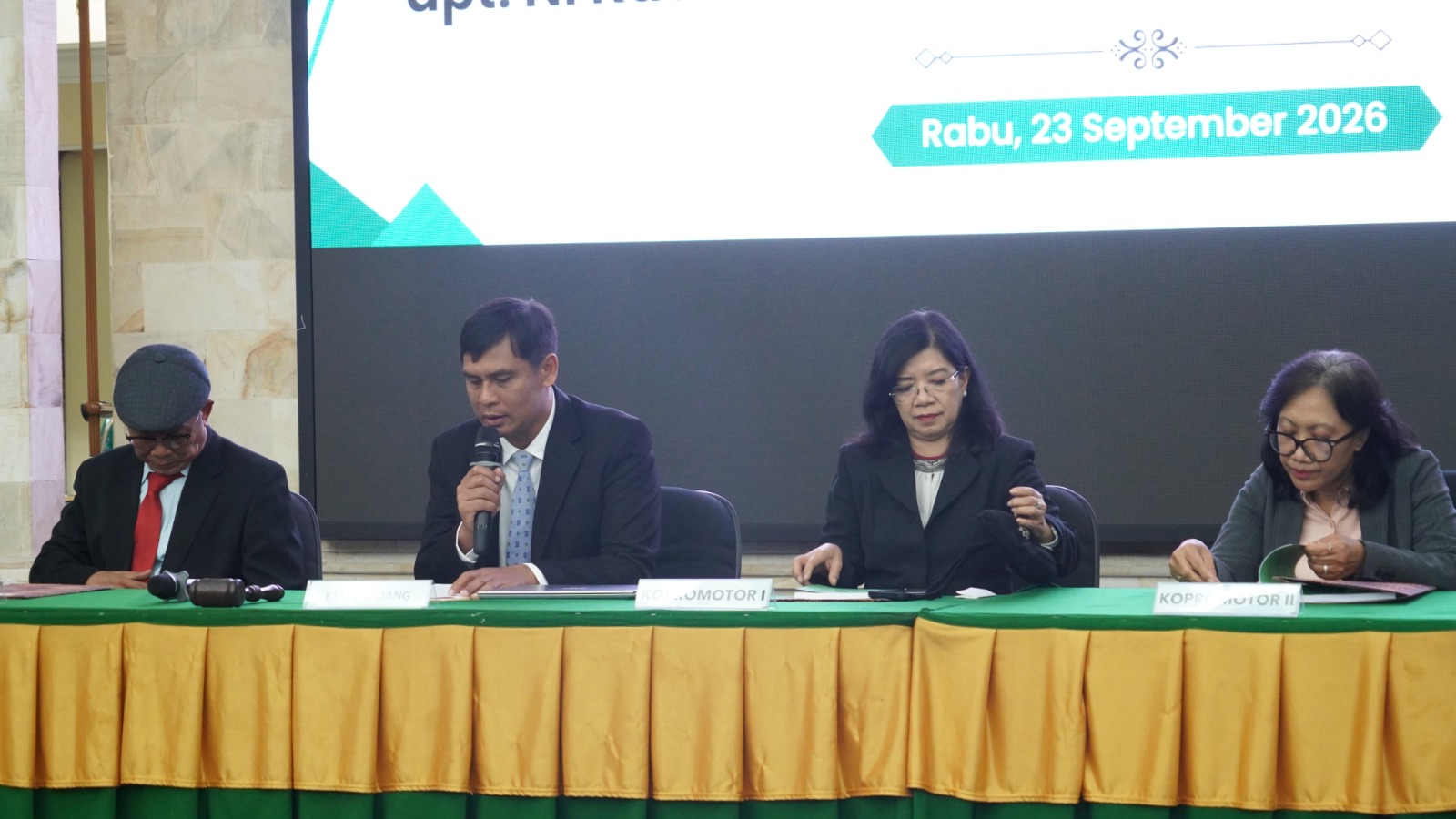
This examination was chaired by the Dean of the Faculty of Medicine, Udayana University, Prof. Dr. dr. I Gede Eka Wiratnaya, Sp.OT., Subsp.Onk.Ort.R(K)., with an examination team comprising:
1. Prof. Dr. rer. Nat. Drs. I Made Agus Gelgel Wirasuta, Apt., M.Si. (Promoter)
2. Prof. Dr. dr. Desak Made Wihandani, M.Kes (Co-promoter I)
3. Dr. dr. Made Ratna Saraswati, Sp.PD, KEMD, FINASIM (Co-promoter II)
4. Prof. Dr. dr. I Wayan Putu Sutirta Yasa, M.Si
5. Prof. Dr. dr. Dyah Kanya Wati, Sp.A (K)
6. Dr.rer.nat. dr. Ni Nyoman Ayu Dewi, M.Si
7. Dr. Dra. Ida Ayu Alit Widhiartini, Apt., M.Si
8. Dr. apt. Dewa Ayu Swastini, S.F., M.Farm
9. dr. Made Winarsa Ruma, S.Ked., Ph.D
With academic invitees:
1. Dr. dr. I Gusti Ayu Widianti, M.Biomed
2. Dr. dr. Ida Ayu Dewi Wiryanthini, S.Ked., M.Biomed.
3. Dr. apt. I Gusti Ngurah Jemmy Anton Prasetia, M.Si
4. Dr. apt. Eka Indra Setyawan, S.Farm., M.Sc
5. apt. Made Ary Sarasmita, S.Farm.Klin., Ph.D
In this examination, Dr. apt. Ni Kadek Santi Maha Dewi, S.Farm., M.Pharm.Sci., was declared to have passed as the 508th doctoral graduate of the Biomedical Sciences Doctoral Study Program at the Faculty of Medicine, Udayana University, with the distinction of "Very Satisfactory."
Gallery


UDAYANA UNIVERSITY